
The map that found a plane
Air France 447 was lost for two years under the Atlantic. Four searches found nothing. Then a team built a probability map of where it likely lay and updated it with every dead end. Even empty water was evidence. The map pointed to a spot crews had already crossed. They found the plane there in a week.
That is Bayesian updating: start with a best estimate, then revise as evidence arrives. You do it with every forecast. The only question is whether you update fast or defend your first guess.
Why a scary number isn't a verdict
The same rule keeps you from overreacting. A fraud alert fires and feels like proof, but when fraud is rare, even a 90%-accurate detector is wrong more often than right. Bayes says to weigh the alarm against the odds before you trust it.
The idea everyone tried to bury
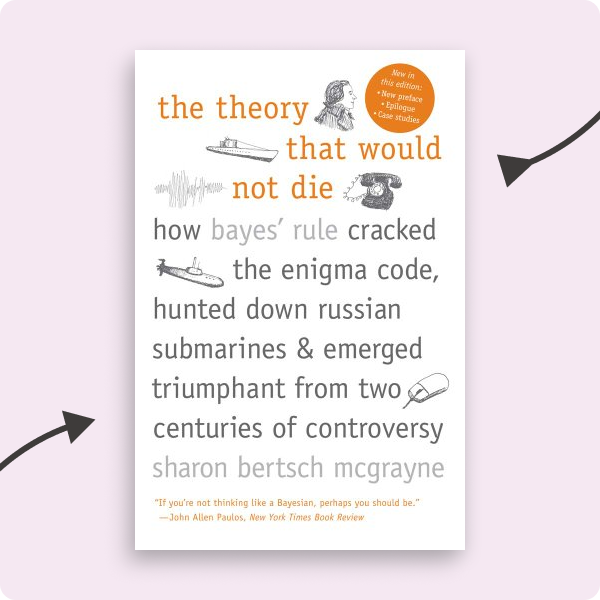
The Theory That Would Not Die by Sharon Bertsch McGrayne. Bayes' rule was dismissed, hidden, then used in secret to crack Enigma and hunt submarines.
Same thread that found Flight 447: start with a belief, let the evidence move it. You won't read a forecast the same way again.