
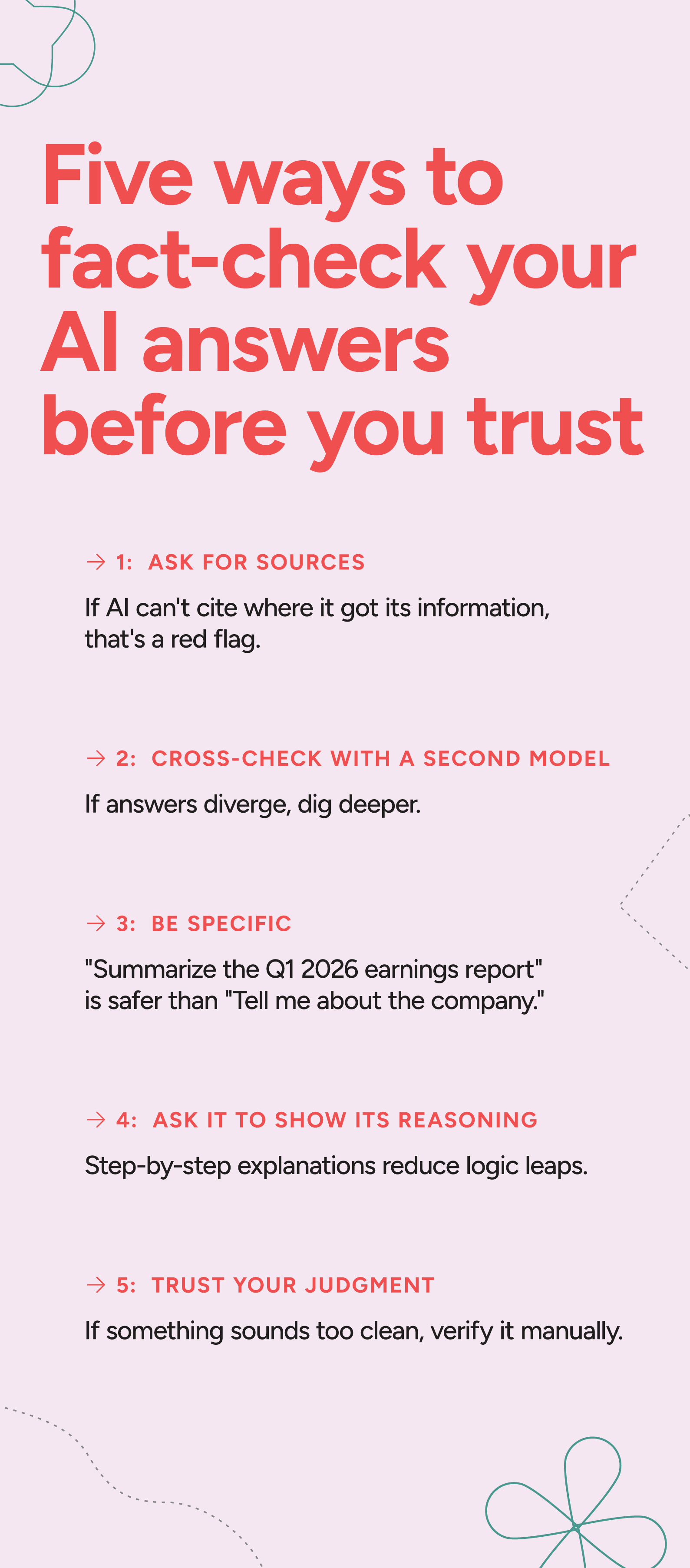
You ask an AI a question. It gives you a clear, well-written answer. It sounds right. But it's completely made up.
This is called a hallucination. AI models don't look things up like a search engine. They predict the most likely next word based on patterns learned during training. When the model doesn't have reliable information, it doesn't say "I don't know." It fills in the gap with whatever sounds plausible.
The best models still hallucinate 3 to 18% of the time. They sound most confident when they're most wrong.
This matters because more people use AI to draft reports, summarize research, and answer business questions. If you don't verify, you risk decisions based on information that never existed.
Why LLMs still get things wrong
Duke University Libraries asks: "It's 2026. Why are LLMs still hallucinating?" It explains the mechanics without jargon. I like it because it doesn't promise a fix. It helps you understand the limitation so you can work with it.