
You already think in decision trees
Should I bring an umbrella? Is it cloudy? Yes. Is there a rain forecast? Yes. Bring one.
You just ran a decision tree. A series of yes/no questions that narrow down the options until you land on an answer. That is exactly how one of the most widely used machine learning models works.
A decision tree starts with a single question at the top (the root), branches into possible answers, and keeps splitting until it reaches a final decision (a leaf). The model learns which questions to ask and in what order by analyzing patterns in data.
Banks use decision trees to assess loan risk. Hospitals use them to support diagnoses. Marketing teams use them to segment customers. The reason they are so popular: you can read and explain them. Unlike many AI models, a decision tree shows its reasoning.
See one in action
Amazon MLU-Explain built an interactive visualization that lets you explore a decision tree step by step.
When algorithms help you decide
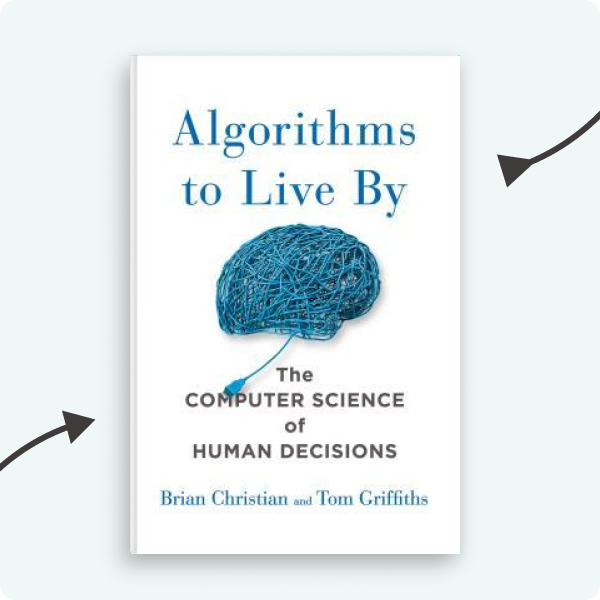
Algorithms to Live By by Brian Christian and Tom Griffiths explores how computer science concepts apply to everyday choices. When to stop looking for an apartment. How to sort your bookshelf. When to explore and when to exploit what you already know. I like this book because it shows that algorithmic thinking is not just for engineers.