

How This Workflow Works
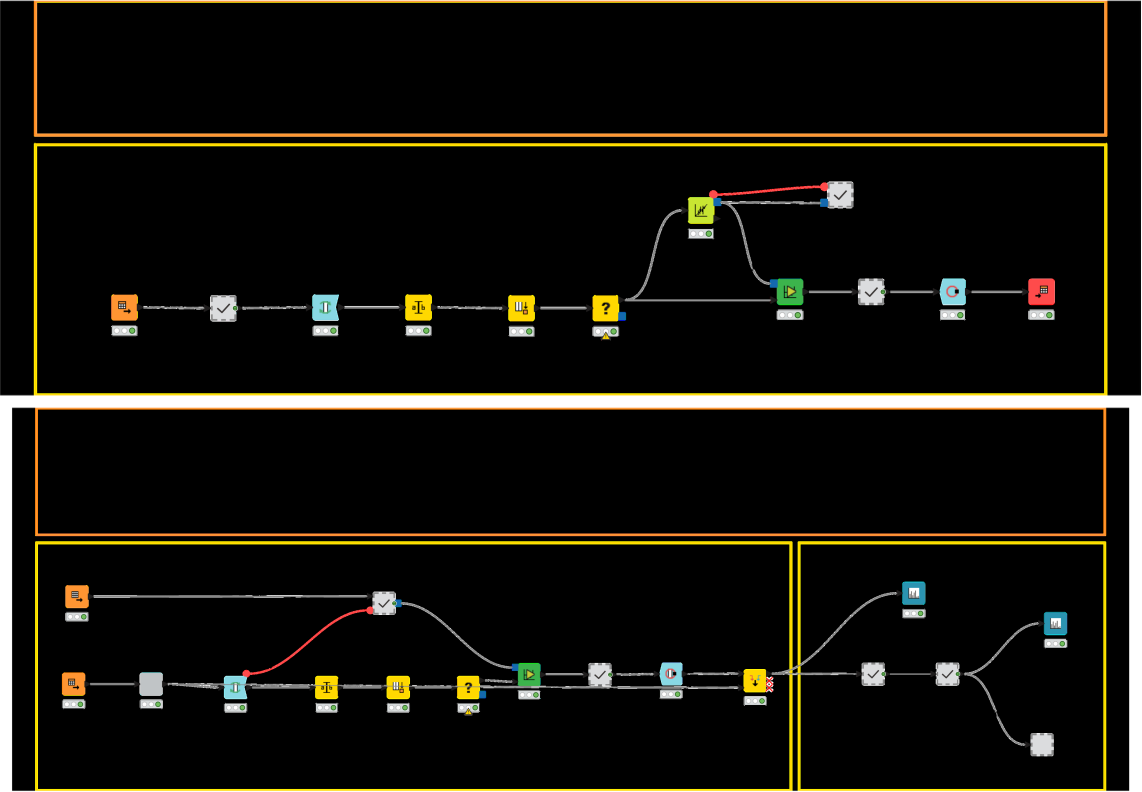
This workflow builds and deploys an anomaly detection model using time series sensor data from a rotor. It trains a predictive model on historical data, calculates error statistics, and then applies the model to new data to detect anomalies and trigger alerts when necessary.
Key Features:
- Detect anomalies in sensor data using a trained predictive model
- Automate the process of model training and deployment for ongoing monitoring
- Generate and use error statistics to improve anomaly detection accuracy
- Trigger alerts based on the severity of detected anomalies
Step-by-step:
1. Engineer Predictive Features:
The workflow processes historical sensor data, addressing missing values and generating lagged features that capture recent trends and patterns. This step ensures the model has relevant predictors to identify abnormal behavior.
2. Train and Validate the Predictive Model:
Using the engineered features, the workflow trains a regression-based model for each sensor signal. It then evaluates the model's performance by calculating error statistics, which help define what constitutes normal versus anomalous behavior.
3. Deploy Model for Real-Time Anomaly Detection:
The trained model and its error thresholds are applied to new, incoming sensor data. The workflow continuously monitors this data, flags anomalies based on deviations from expected patterns, and triggers alerts when anomalies exceed predefined severity levels.