

How This Workflow Works
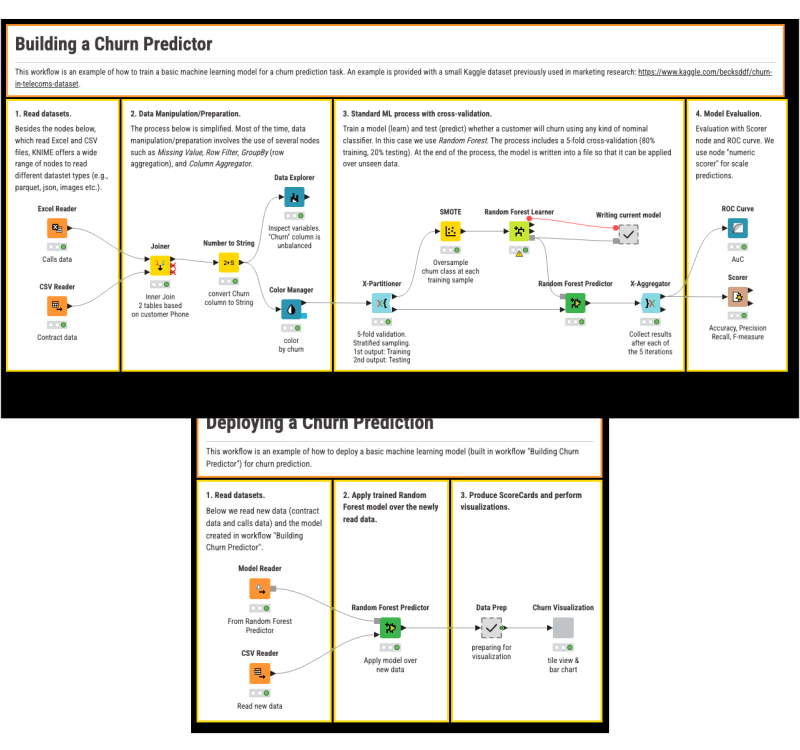
This workflow builds a churn prediction model by balancing customer data with oversampling and training a random forest classifier. It uses cross-validation to evaluate performance and applies the model to new data to predict churn. Results are then prepared for easy visualization and interpretation.
Key Features:
- Combine multiple data sources to build a comprehensive customer profile.
- Address class imbalance using automated oversampling techniques.
- Train, validate, and apply a churn prediction model to new customer data.
- Generate churn probabilities with clear metrics and visualizations to quickly identify high-risk customers.
Step-by-step:
1. Integrate and Explore Customer Data:
Combine customer data from multiple sources into a unified dataset, then explore key variables and identify class imbalance in churn outcomes.
2. Balance, Partition, and Train the Model:
Address class imbalance using oversampling, then split the data into cross-validation folds. Train a random forest model on each fold to assess predictive performance.
3. Evaluate and Apply the Model:
Calculate accuracy, precision, recall, and other metrics, and use ROC curves to evaluate model quality. Apply the trained model to new customer data to generate churn probability scores.
4. Format, Visualize, and Interpret Results:
Organize prediction outputs for clarity, then use visualizations like tile views and bar charts to identify high-risk customers and support action.