

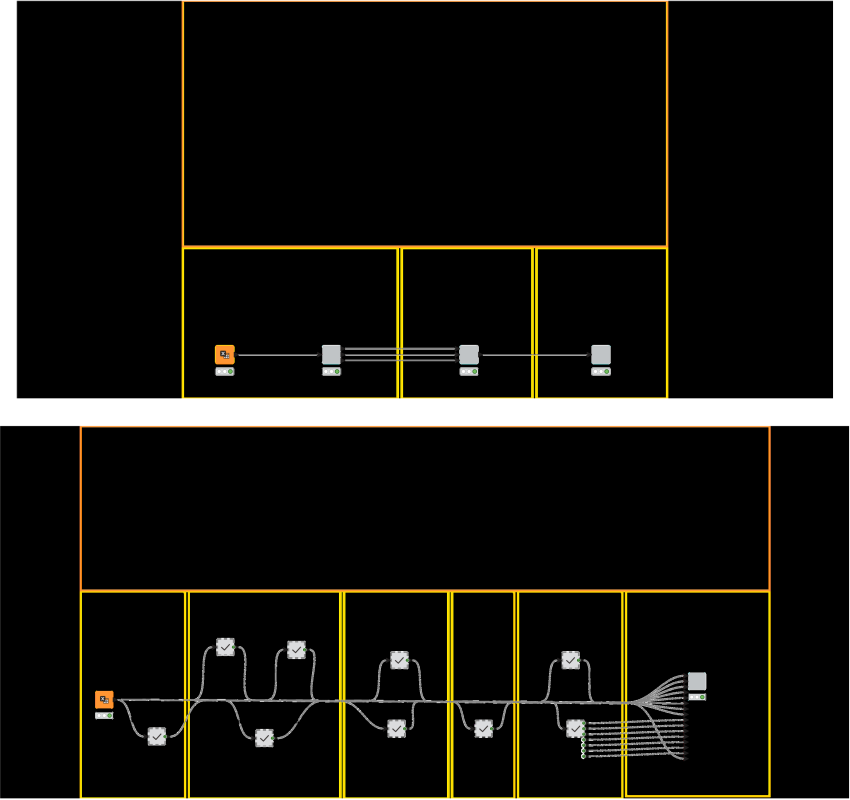
How This Workflow Works
This workflow implements several attribution models to analyze marketing channel effectiveness, ranging from simple touch-based approaches to advanced methods like regression and Shapley value analysis. It processes customer journey data, applies multiple attribution techniques, and presents the results in an interactive dashboard.
Key Features:
- Compare multiple attribution models, from basic to advanced, to assess channel impact.
- Quantify the contribution of each marketing channel using statistical and machine learning methods.
- Identify the incremental value of each touchpoint through Shapley value analysis.
- Visualize and interact with attribution results in a comprehensive dashboard.
Step-by-step:
1. Analyze Channel Impact with Touch-Based Models:
The workflow first applies straightforward attribution models, such as assigning credit to the first or last channel a customer interacted with. It also calculates average channel contributions, providing a baseline understanding of how often each channel appears in successful journeys.
2. Assess Channel Relationships Using Correlation and Regression:
Next, the workflow uses correlation analysis and logistic regression to examine the statistical relationship between channel exposures and purchase outcomes. This step quantifies how strongly each channel is associated with conversions, adjusting for the presence of other channels.
3. Estimate Incremental Value with Shapley Value Analysis:
The workflow then applies Shapley value analysis, a method from cooperative game theory, to estimate the unique contribution of each channel by considering all possible combinations of touchpoints. This approach helps isolate the incremental effect of each channel on the likelihood of purchase.
4. Visualize and Share Insights:
Finally, the workflow compiles results from all attribution models into an interactive dashboard. Users can explore visualizations such as bar charts, heatmaps, and tables to compare model outputs and gain actionable insights into channel performance.